
The Challenge Ahead of the holiday shopping period, we partnered with the Mighty Well team to...
It's easy to fall into the trap of believing that creative volume is the primary driver of scale. You increase creative output, flood your ad accounts with minor iterations of the same concept, and then wonder why you keep hitting spend and revenue ceilings.
I bet this will sound familiar:
You launch new ads and they work well initially, but over time your reach stagnates, your CPMs and CPCs increase, and your results fall off a cliff. So you tweak some of the top performing ads, launch them, and the same thing happens or they don't get any ad spend.
This is the volume paradox. In a paid advertising landscape ruled by sophisticated algorithms, simply doing more of the same (or nearly the same) does not lead to growth; it leads to creative fatigue and wasted spend as the channels fail to find new audiences.
To scale profitably, you need to shift your focus from volume of ads to volume of angles.
This shift involves testing fundamentally different concepts, hooks, and angles that appeal to diverse psychological triggers. By prioritizing variance, you provide the algorithm with the data it needs to find new pockets of customers and drive measurable results.
Your Creative Is Your Targeting
When you define a primary target persona, it’s easy to treat them as a single person. But if you look closer, that primary persona is actually made up of distinct cohorts. While everyone within your target audience might share similar demographics or high-level goals, each individual cohort contains people dealing with slightly different variations of the problem that your product or service solves.
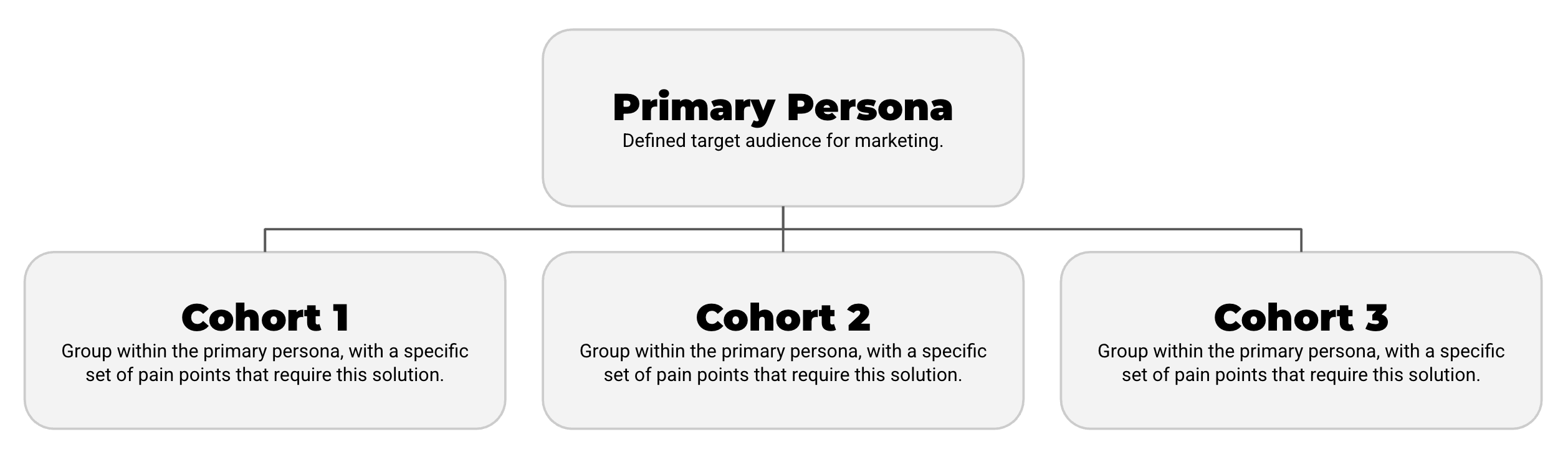
They have unique interests, distinct needs, and entirely different buying triggers.
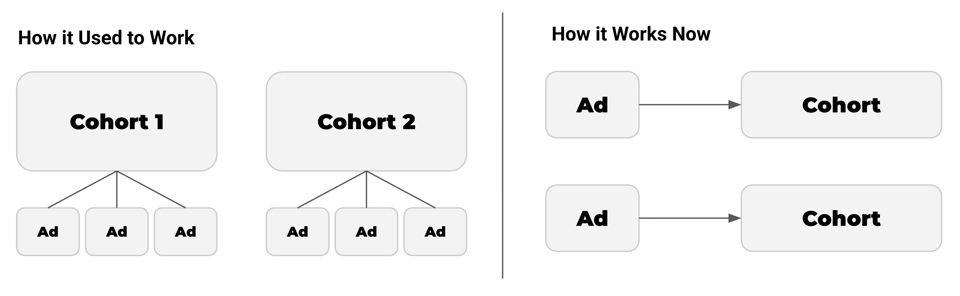
We used to have tight, manual control over how these specific cohorts were segmented and targeted on the backend. You set the targeting, launch ads for that specific persona, and the ad channels serve the ads to members of that audience. But performance advertising doesn’t work that way anymore.
The ad channels have stripped most of the targeting options, meaning you have fewer ways to control who sees your ads. Now, the reliance is on the algorithms to find the right audience members.
To address this, you need to diversify your creatives to find more cohorts within your target persona.
The Difference Between Iteration and Variance
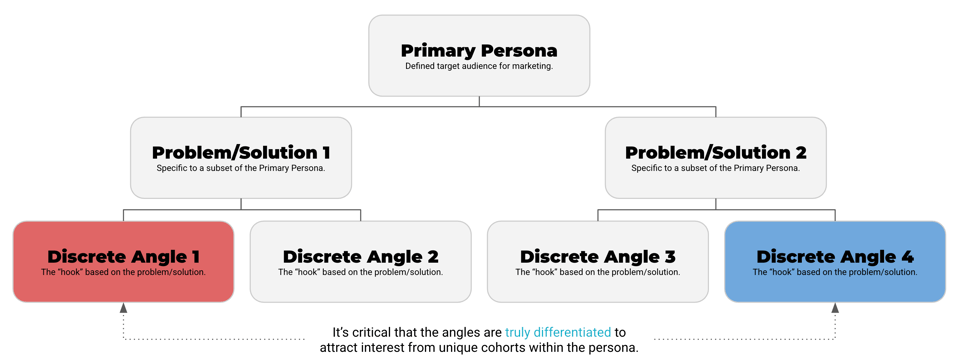
Marketers often confuse testing with minor tweaking. Changing a button color or swapping a single word in a headline is an iteration.
While iterations are useful for fine-tuning a winning concept, they rarely unlock new levels of performance. In addition, it doesn't help the algorithm find new audience segments – more on that below.
Discrete variance requires a true departure from your current ad content. It means...
-
Testing a high-production brand story against a raw, user-generated testimonial.
-
Testing a fear-of-missing-out angle against a logic-based educational breakdown.
Each creative asset should serve as a distinct hypothesis. When you introduce true variance, you allow the platform's machine learning to identify which specific creative direction resonates with which audience segment.
This data-driven approach ensures that you aren't just spending money to reach the same people repeatedly, but actively expanding your reach to new, profitable cohorts.
Take a look at the two ads below, for example...
The first ad targets a specific pain point; people who are interested in buying peptides, but don't trust overseas manufacturers to provide them with a quality product that's right for their needs.
The ad on the right addresses a completely different pain point; people who seek to look younger, and may not know that peptides are a viable solution.
By creating separation between the angle and the hook, we are able to attract interest from different cohorts of people within the same target persona.
How Discrete Variance Feeds the Algorithm
Advertising platforms (namely Meta and Google) are powered by machine learning models that prioritize user experience. When you deploy a creative strategy built on discrete variance, you are feeding the algorithm the high-quality data it needs to perform. In a system where the ad is the targeting, your creative assets must work as specialized filters.
If every ad in your account looks and feels the same, the algorithm treats them as a single data point, limiting your reach to a narrow audience segment that has already been exhausted.
By introducing fundamentally different creative angles, such as a direct-to-camera founder story versus a fast-paced product demonstration, you allow the platform to find new pockets of potential customers. The algorithm observes which users engage with which specific hooks.
This creates a feedback loop: the platform identifies a new profitable cohort, and you receive insights into which psychological triggers are actually driving your growth. This isn't about guessing, but rather about using variance to grow your market.
Monitoring and Measurement
By monitoring frequency, or how often (on average) an ad has been shown to each member of your audience, we can determine how immediate our need is for new creative. As frequency creeps up, it indicates not only creative fatigue, but also that the algorithms have stopped seeking out new audience groups to show your ads to.
Frequency increases are often an early indicator that your ad performance is about to plateau or drop off altogether. Monitoring this allows us to act in advance and avoid stalled account growth.
This reduces the friction in your account and prevents the rapid performance decay often seen with repetitive, high-volume strategies. Each discrete concept acts as a new entry into the market, identifying where demand exists and where your ROI can be maximized.